[Unitree Go2 part 1] Sim2Real 첫 도전
Unitree Go2에 강화학습 기반 보행 policy를 실제 deploy하기 위해 baseline을 정하고, 첫 학습과 real deploy를 시도한 과정을 정리한다.
1. 프로젝트 목표
이 프로젝트는 Unitree Go2를 구매한 뒤, 실제 로봇에서 강화학습 기반 보행 policy를 deploy해보는 것을 목표로 시작했습니다. 하지만 최종 목표는 단순히 “걷게 만들기”에서 끝나지 않습니다.
장기적으로 주장하고 싶은 것은 다음과 같습니다.
실로봇 장시간 보행에서는 nominal RL policy가 command tracking은 잘해도, 특정 actuator에 열과 부하가 불균일하게 쌓여 thermal bottleneck이 될 수 있다. 따라서
/lowstate에서 얻을 수 있는 per-actuator reported temperature, current/load, torque, joint state를 이용해 runtime에서 보행 입력을 조절하는 thermal-aware regulator가 필요하다.
여기서 temperature는 실제 winding temperature를 직접 측정한 값이라고 단정하기보다, robot이 onboard로 report하는 actuator temperature로 다루는 편이 안전합니다.
즉 목표는 새로운 보행 policy 하나를 더 만드는 것이 아니라, 기본 보행 policy 위에 per-actuator reported temperature와 current-derived load를 보는 runtime regulation layer를 얹어, 비슷한 walking task를 유지하면서 peak reported temperature와 temperature rise를 줄일 수 있는지 확인하는 것입니다.
이 글은 그 첫 단계로, 이후 실험의 기준선이 될 기본 보행 policy를 학습하고 실제 로봇에 올려보는 과정을 다룹니다. 이 baseline은 나중에 proposed thermal-aware controller가 정말 나아졌는지 비교하기 위한 control group이 됩니다.
2. 베이스라인 선택
가장 먼저 정해야 할 것은 baseline이었습니다. 처음부터 모든 환경과 deploy 코드를 직접 만들기보다는, 이미 real robot deploy까지 고려된 reference를 기준으로 잡는 편이 안전하다고 판단했습니다.
여기서 baseline은 단순한 출발 코드가 아닙니다. 나중에 thermal-aware regulator를 붙였을 때 비교할 nominal policy이기도 합니다. 그래서 baseline은 “걷는 것”뿐 아니라, 같은 command profile에서 reported actuator temperature, torque, current, runtime이 어떻게 나오는지 측정할 수 있어야 합니다.
baseline을 고르는 기준은 아래와 같았습니다.
- Unitree Go2를 real robot에서 걷게 할 수 있는 RL 보행 모델일 것
- Isaac Lab 또는 Unitree에서 공개한 환경 설정을 기반으로 할 것
- 이후 Sim2Real gap을 줄이기 위해 설정을 확장하기 쉬울 것
- 이후
/lowstate기반 thermal/current logging과 연결하기 쉬울 것
결론적으로 baseline은 Unitree에서 공개한 unitree_rl_lab을 따르기로 했습니다.
https://github.com/unitreerobotics/unitree_rl_lab
선택한 이유는 세 가지였습니다.
- Unitree에서 직접 배포한 repository라 사용 설명과 deploy 흐름이 비교적 잘 정리되어 있었습니다.
- G1 humanoid 예제가 실제 로봇에서 걷는 것을 확인했기 때문에, Go2에서도 같은 방향으로 시작해볼 수 있다고 판단했습니다.
- Unitree SDK2와의 연동 코드가 포함되어 있어 real deploy까지 이어가기 쉬웠습니다.
3. Isaac Sim 학습
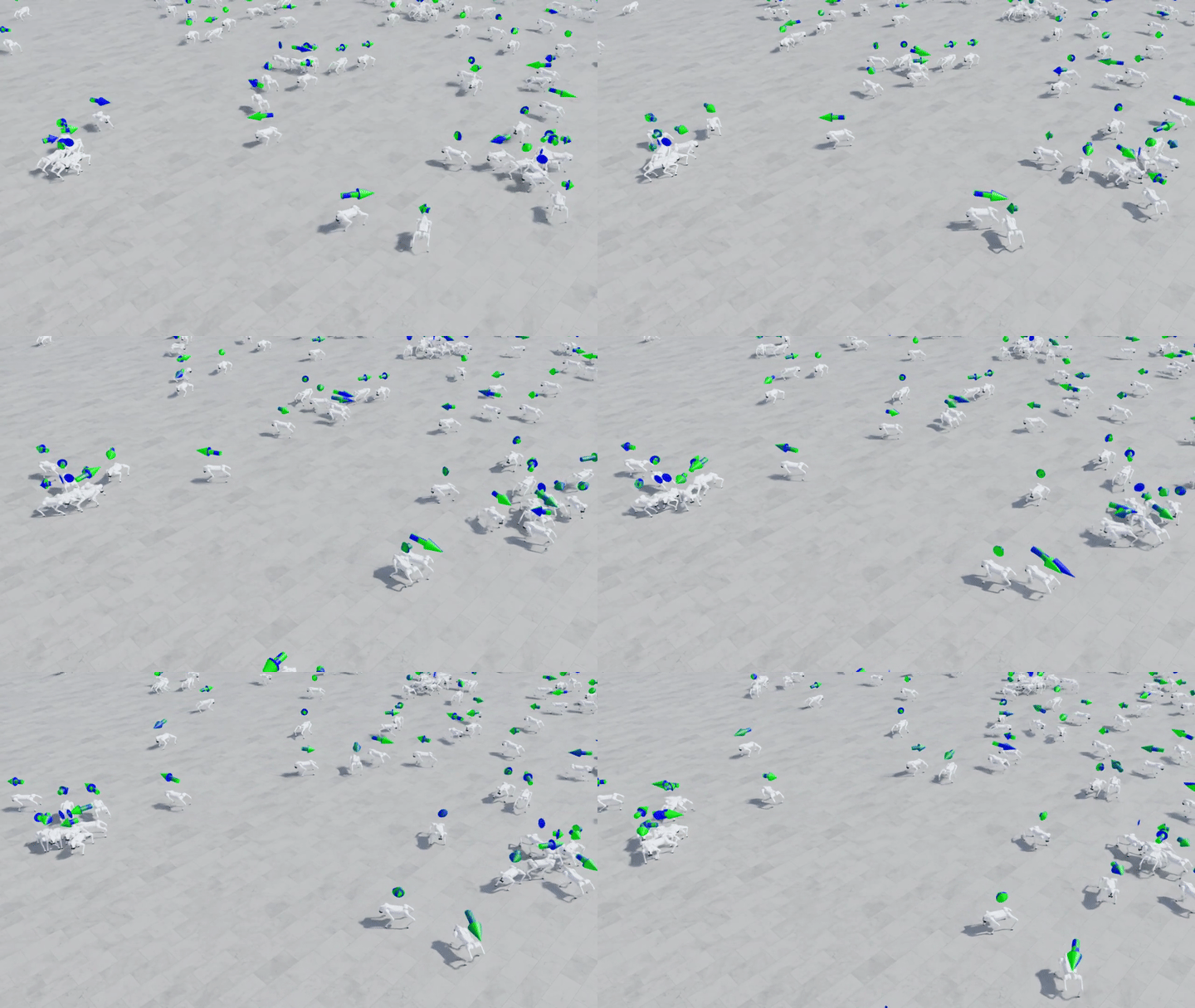
simulation에서 학습하는 과정 자체는 비교적 단순했습니다. 첫 시도였기 때문에 기본 설정을 최대한 유지하고, iteration을 10000으로 두고 학습했습니다.
1
python scripts/rsl_rl/train.py --headless --task Unitree-Go2-Velocity --video --video_interval 1000 --num_envs 4096 --seed 42 --max_iterations 10000
 {.popup .img-link .shimmer}
--video 옵션을 사용해 학습 중간 결과가 자동으로 저장되도록 했습니다. 영상만 보면 policy가 simulation 안에서는 나쁘지 않게 걷는 것처럼 보였습니다.
4. 실제 로봇 Deploy 준비
원래는 real robot에 올리기 전에 CPU 기반 시뮬레이터인 MuJoCo에서 sim-to-sim 테스트를 먼저 해보는 편이 맞습니다. 하지만 첫 학습 결과가 꽤 좋아 보였기 때문에, 이 단계에서는 바로 실제 로봇에 deploy해보기로 했습니다.
4.1 Unitree Python SDK 기반 제어
모델을 deploy하기 위해 /lowstate topic에서 joint_pose, joint_vel, imu, pressure sensor, last_action 등을 observation으로 구성했습니다. 이후 ONNX 모델로 action을 추론하고, 50 Hz로 /lowcmd에 command를 발행하는 구조를 사용했습니다.
- Joint Pos: $q_{rel} = q - \text{default joint pos}$
- Joint Vel: $dq$
- Base angular velocity: $\text{imu (gyroscope)} : [w_x, w_y, w_z]$
- Projected gravity: $g_{body} = R(q)^T \cdot \begin{bmatrix} 0 \ 0 \ -1 \end{bmatrix}$
- Velocity command: keyboard input
code base
1
2
3
4
5
6
7
8
9
10
11
12
13
14
15
16
17
18
19
20
21
22
23
24
25
26
27
28
29
30
31
32
33
34
35
36
37
38
39
40
41
42
43
44
45
46
47
48
49
50
51
52
53
54
55
56
57
58
59
60
61
62
63
64
65
66
67
68
69
70
71
72
73
74
75
76
77
78
79
80
81
82
83
84
85
86
87
88
89
90
91
92
93
94
95
96
97
98
99
100
101
102
103
104
105
106
107
108
109
110
111
112
113
114
115
116
117
118
119
120
121
122
123
124
125
126
127
128
129
130
131
132
133
134
135
136
137
138
139
140
141
142
143
144
145
146
147
148
149
150
151
152
153
154
155
156
157
158
159
160
161
162
163
164
165
166
167
168
169
170
171
172
173
174
175
176
177
178
179
180
181
182
183
184
185
186
187
188
189
190
191
192
193
194
195
196
197
198
199
200
201
202
203
204
205
206
207
208
209
210
211
212
213
214
215
216
217
218
219
220
221
222
223
224
225
226
227
228
229
230
231
232
233
234
235
236
237
238
239
240
241
242
243
244
245
246
247
248
249
250
251
252
253
254
255
256
257
258
259
260
261
262
263
264
265
266
267
268
269
270
271
272
273
274
275
276
277
278
279
280
281
282
283
284
285
286
287
288
289
290
291
292
293
294
295
296
297
298
299
300
301
302
303
304
305
306
307
308
309
310
311
312
313
314
315
316
317
318
319
320
321
322
323
324
325
326
327
328
329
330
331
332
333
334
335
336
337
338
339
340
341
342
343
344
345
346
347
348
349
350
351
352
353
354
355
356
357
358
359
360
361
362
363
364
365
366
367
368
369
370
371
372
373
374
375
376
377
378
379
380
381
382
383
384
385
386
387
388
389
390
391
392
393
394
395
396
397
398
399
400
401
402
403
404
405
406
407
408
409
410
411
412
413
414
415
416
417
418
419
420
421
422
423
424
425
426
427
428
429
430
431
432
433
434
435
436
437
438
439
440
441
442
443
444
445
446
447
448
449
450
451
452
453
454
455
456
457
458
459
460
461
462
463
464
465
466
467
468
469
470
471
472
473
474
475
476
477
478
479
480
481
482
483
484
485
486
487
488
489
490
491
492
493
494
495
496
497
498
499
500
501
502
503
504
505
506
507
508
509
510
511
512
513
514
515
516
517
518
519
520
521
522
523
524
525
526
527
528
import argparse
import math
import threading
import time
import sys
import select
from typing import Callable, Dict, List

import numpy as np
import yaml

from unitree_sdk2py.core.channel import ChannelFactoryInitialize
from unitree_sdk2py.core.channel import ChannelPublisher, ChannelSubscriber
from unitree_sdk2py.idl.default import unitree_go_msg_dds__LowCmd_, unitree_go_msg_dds__LowState_
from unitree_sdk2py.idl.unitree_go.msg.dds_ import LowCmd_
from unitree_sdk2py.idl.unitree_go.msg.dds_ import LowState_
from unitree_sdk2py.utils.crc import CRC
from unitree_sdk2py.utils.thread import RecurrentThread
from unitree_sdk2py.comm.motion_switcher.motion_switcher_client import MotionSwitcherClient
from unitree_sdk2py.go2.sport.sport_client import SportClient
import unitree_legged_const as go2

try:
    import onnxruntime as ort
except ModuleNotFoundError as exc:
    raise RuntimeError(
        "onnxruntime is required. install with: python -m pip install onnxruntime"
    ) from exc

try:
    import termios
    import tty
except ImportError:  # pragma: no cover - non-posix fallback
    termios = None
    tty = None


DEFAULT_DEPLOY_YAML = "/home/loe/workspace/github/unitree_rl_lab/logs/rsl_rl/unitree_go2_velocity/2026-03-10_00-08-13/params/deploy.yaml"
DEFAULT_ONNX = "/home/loe/workspace/github/unitree_rl_lab/logs/rsl_rl/unitree_go2_velocity/2026-03-10_00-08-13/exported/policy.onnx"


def _ensure_float_array(value, size: int | None = None) -> np.ndarray:
    if isinstance(value, (int, float)):
        arr = np.array([value], dtype=np.float32)
    else:
        arr = np.array(value, dtype=np.float32)
    if arr.ndim != 1:
        arr = arr.reshape(-1)
    if size is not None:
        if arr.size == 1 and size > 1:
            arr = np.full(size, float(arr[0]), dtype=np.float32)
        elif arr.size != size:
            raise ValueError(f"expected size={size}, got={arr.size}")
    return arr


def _scale_and_clip(values: np.ndarray, scale: float | list[float], clip: list[float] | tuple[float, float] | None):
    if isinstance(scale, (int, float)):
        values = values * float(scale)
    else:
        s = _ensure_float_array(scale, values.size)
        values = values * s

    if clip is not None:
        lo, hi = clip
        values = np.clip(values, float(lo), float(hi))
    return values


# def _quat_to_gravity_body(q: List[float], order: str) -> np.ndarray:
#     # q is assumed unit-length quaternion
#     if q is None or len(q) < 4:
#         return np.array([0.0, 0.0, -1.0], dtype=np.float32)

#     if order == "wxyz":
#         w, x, y, z = [float(v) for v in q[:4]]
#     else:
#         x, y, z, w = [float(v) for v in q[:4]]

#     n2 = w * w + x * x + y * y + z * z
#     if n2 < 1e-8:
#         return np.array([0.0, 0.0, -1.0], dtype=np.float32)
#     inv_n = 1.0 / math.sqrt(n2)
#     w, x, y, z = w * inv_n, x * inv_n, y * inv_n, z * inv_n

#     # base(=body) to world rotation matrix from quaternion.
#     # projected gravity in body frame = R^T @ [0,0,-1]
#     # this becomes [-R02, -R12, -R22]
#     r02 = 2.0 * (x * z + y * w)
#     r12 = 2.0 * (y * z - x * w)
#     r22 = 1.0 - 2.0 * (x * x + y * y)
#     return np.array([-r02, -r12, -r22], dtype=np.float32)

def _quat_to_gravity_body(q, order: str) -> np.ndarray:
    if q is None or len(q) < 4:
        return np.array([0.0, 0.0, -1.0], dtype=np.float32)

    if order == "wxyz":
        w, x, y, z = [float(v) for v in q[:4]]
    else:
        x, y, z, w = [float(v) for v in q[:4]]

    n2 = w * w + x * x + y * y + z * z
    if n2 < 1e-8:
        return np.array([0.0, 0.0, -1.0], dtype=np.float32)

    inv_n = 1.0 / math.sqrt(n2)
    w, x, y, z = w * inv_n, x * inv_n, y * inv_n, z * inv_n

    # correct: R^T @ [0,0,-1] = [-R20, -R21, -R22]
    gx = 2.0 * (x * z - y * w)
    gy = 2.0 * (y * z + x * w)
    gz = 1.0 - 2.0 * (x * x + y * y)

    return np.array([-gx, -gy, -gz], dtype=np.float32)

class KeyboardController:
    def __init__(
        self,
        example: "Go2RlExample",
        step_x: float = 0.05,
        step_y: float = 0.05,
        step_z: float = 0.10,
    ):
        self.example = example
        self.step_x = float(step_x)
        self.step_y = float(step_y)
        self.step_z = float(step_z)
        self._thread: threading.Thread | None = None
        self._running = False
        self._old_tty_settings = None

    def start(self):
        if sys.stdin is None or not sys.stdin.isatty():
            print("[WARN] stdin is not a tty; keyboard control is disabled.")
            return
        if termios is None or tty is None:
            print("[WARN] termios/tty is not available; keyboard control is disabled.")
            return

        self._running = True
        self._thread = threading.Thread(target=self._run, daemon=True, name="go2_keyboard")
        self._thread.start()
        print("[INFO] Keyboard control enabled: w/s=+/- vx, a/d=+/- vy, q/e=+/- wz, space=reset")

    def stop(self):
        self._running = False
        if self._thread is not None and self._thread.is_alive():
            self._thread.join(timeout=1.0)
        self._restore_terminal()

    def _restore_terminal(self):
        if self._old_tty_settings is not None and sys.stdin is not None and termios is not None:
            try:
                fd = sys.stdin.fileno()
                termios.tcsetattr(fd, termios.TCSADRAIN, self._old_tty_settings)
            except Exception:
                pass
            self._old_tty_settings = None

    def _run(self):
        fd = sys.stdin.fileno()
        self._old_tty_settings = termios.tcgetattr(fd)
        tty.setcbreak(fd)
        try:
            while self._running:
                readable, _, _ = select.select([sys.stdin], [], [], 0.05)
                if not readable:
                    continue

                ch = sys.stdin.read(1).lower()
                if ch == "w":
                    self.example.update_command_delta(self.step_x, 0.0, 0.0)
                elif ch == "s":
                    self.example.update_command_delta(-self.step_x, 0.0, 0.0)
                elif ch == "a":
                    self.example.update_command_delta(0.0, self.step_y, 0.0)
                elif ch == "d":
                    self.example.update_command_delta(0.0, -self.step_y, 0.0)
                elif ch == "q":
                    self.example.update_command_delta(0.0, 0.0, self.step_z)
                elif ch == "e":
                    self.example.update_command_delta(0.0, 0.0, -self.step_z)
                elif ch == " ":
                    self.example.set_command(0.0, 0.0, 0.0)
                elif ch == "\x03":
                    self._running = False
                self._print_command()
        finally:
            self._restore_terminal()

    def _print_command(self):
        cmd = self.example.get_command()
        print(f"\rcommand -> vx:{cmd[0]:+.2f}, vy:{cmd[1]:+.2f}, wz:{cmd[2]:+.2f}", end="", flush=True)


class Go2RlExample:
    def __init__(
        self,
        onnx_path: str,
        deploy_cfg_path: str,
        quat_order: str = "wxyz",
        command: tuple[float, float, float] = (0.0, 0.0, 0.0),
        control_dt: float | None = None,
    ):
        self.cmd_lin_x, self.cmd_lin_y, self.cmd_ang = command
        self.quat_order = quat_order

        self.low_state: LowState_ | None = None
        self._state_lock = threading.Lock()
        self._command_lock = threading.Lock()

        self.low_cmd = unitree_go_msg_dds__LowCmd_()
        self.crc = CRC()

        self.cfg = self._load_yaml(deploy_cfg_path)
        self.joint_ids_map = np.array(self.cfg["joint_ids_map"], dtype=np.int32)
        self.stiffness = _ensure_float_array(self.cfg.get("stiffness", np.ones(len(self.joint_ids_map))), len(self.joint_ids_map))
        self.damping = _ensure_float_array(self.cfg.get("damping", np.ones(len(self.joint_ids_map))), len(self.joint_ids_map))
        self.default_joint_pos = _ensure_float_array(self.cfg.get("default_joint_pos", np.zeros(len(self.joint_ids_map))), len(self.joint_ids_map))

        self.actions_cfg = self.cfg["actions"]["JointPositionAction"]
        self.action_clip = self.actions_cfg.get("clip", [-100.0, 100.0])
        self.action_scale = _ensure_float_array(self.actions_cfg.get("scale", 1.0), len(self.joint_ids_map))
        self.action_offset = _ensure_float_array(self.actions_cfg.get("offset", 0.0), len(self.joint_ids_map))
        self.action_dim = len(self.joint_ids_map)

        self.obs_cfg = self.cfg["observations"]
        self.obs_term_builders: list[tuple[str, Dict]] = []
        for name, term in self.obs_cfg.items():
            if term.get("history_length", 1) != 1:
                # current sample does not keep history buffer
                pass
            self.obs_term_builders.append((name, term))

        command_cfg = self.cfg.get("commands", {}).get("base_velocity", {})
        self.command_limits = command_cfg.get("ranges", {"lin_vel_x": [-1.0, 1.0], "lin_vel_y": [-0.4, 0.4], "ang_vel_z": [-1.0, 1.0]})

        self.last_action = np.zeros(self.action_dim, dtype=np.float32)
        self.last_infer_time = time.time()

        self._init_onnx(onnx_path)
        self._init_dof_cmd()
        self._init_communication()
        self._init_robot_mode()

        self.control_dt = float(control_dt) if control_dt is not None else float(self.cfg.get("step_dt", 0.02))
        self._control_thread: RecurrentThread | None = None

    @staticmethod
    def _load_yaml(path: str) -> Dict:
        with open(path, "r") as f:
            cfg = yaml.safe_load(f)
        if not isinstance(cfg, dict):
            raise RuntimeError(f"{path} does not contain a valid yaml dict")
        return cfg

    def _init_onnx(self, onnx_path: str):
        self.ort_session = ort.InferenceSession(onnx_path, providers=["CPUExecutionProvider"])
        self.ort_input_name = self.ort_session.get_inputs()[0].name
        self.ort_output_name = self.ort_session.get_outputs()[0].name
        input_shape = self.ort_session.get_inputs()[0].shape
        output_shape = self.ort_session.get_outputs()[0].shape
        if input_shape is not None and len(input_shape) >= 2 and isinstance(input_shape[1], int):
            if input_shape[1] != self.observation_dim:
                raise RuntimeError(
                    f"ONNX input dim mismatch: model expects {input_shape[1]}, "
                    f"but current observation dim is {self.observation_dim}"
                )
        if output_shape is not None and len(output_shape) >= 2 and isinstance(output_shape[1], int):
            if output_shape[1] != self.action_dim:
                raise RuntimeError(
                    f"ONNX output dim mismatch: model outputs {output_shape[1]}, "
                    f"but action dim is {self.action_dim}"
                )

    @property
    def observation_dim(self) -> int:
        if not hasattr(self, "_observation_dim"):
            dim = 0
            for name, term in self.obs_term_builders:
                if name == "base_ang_vel":
                    dim += 3
                elif name == "projected_gravity":
                    dim += 3
                elif name == "velocity_commands":
                    dim += 3
                elif name in {"joint_pos_rel", "joint_vel_rel", "last_action"}:
                    dim += self.action_dim
                else:
                    raise RuntimeError(f"Unsupported observation term: {name}")
            self._observation_dim = int(dim)
        return self._observation_dim

    def _init_dof_cmd(self):
        self.low_cmd.head[0] = 0xFE
        self.low_cmd.head[1] = 0xEF
        self.low_cmd.level_flag = 0xFF
        self.low_cmd.gpio = 0
        for i in range(20):
            self.low_cmd.motor_cmd[i].mode = 0x01
            self.low_cmd.motor_cmd[i].q = go2.PosStopF
            self.low_cmd.motor_cmd[i].dq = go2.VelStopF
            self.low_cmd.motor_cmd[i].kp = 0.0
            self.low_cmd.motor_cmd[i].kd = 0.0
            self.low_cmd.motor_cmd[i].tau = 0.0

    def _init_communication(self):
        self.lowcmd_publisher = ChannelPublisher("rt/lowcmd", LowCmd_)
        self.lowcmd_publisher.Init()
        self.lowstate_subscriber = ChannelSubscriber("rt/lowstate", LowState_)
        self.lowstate_subscriber.Init(self.LowStateMessageHandler, 10)

        self.sc = SportClient()
        self.sc.SetTimeout(5.0)
        self.sc.Init()

        self.msc = MotionSwitcherClient()
        self.msc.SetTimeout(5.0)
        self.msc.Init()

    def _init_robot_mode(self):
        status, result = self.msc.CheckMode()
        while result["name"]:
            self.sc.StandDown()
            self.msc.ReleaseMode()
            time.sleep(1.0)
            status, result = self.msc.CheckMode()
        if status != 0:
            print(f"[WARN] Motion switcher status={status}, result={result}")

    def LowStateMessageHandler(self, msg: LowState_):
        with self._state_lock:
            self.low_state = msg

    def _clip_command(self, cmd: tuple[float, float, float]) -> List[float]:
        cx, cy, cz = cmd
        cx_range = self.command_limits.get("lin_vel_x", (-1.0, 1.0))
        cy_range = self.command_limits.get("lin_vel_y", (-0.4, 0.4))
        cz_range = self.command_limits.get("ang_vel_z", (-1.0, 1.0))
        cx = float(np.clip(cx, cx_range[0], cx_range[1]))
        cy = float(np.clip(cy, cy_range[0], cy_range[1]))
        cz = float(np.clip(cz, cz_range[0], cz_range[1]))
        return [cx, cy, cz]

    def get_command(self) -> tuple[float, float, float]:
        with self._command_lock:
            return self.cmd_lin_x, self.cmd_lin_y, self.cmd_ang

    def set_command(self, cmd_x: float, cmd_y: float, cmd_z: float):
        with self._command_lock:
            self.cmd_lin_x, self.cmd_lin_y, self.cmd_ang = self._clip_command((cmd_x, cmd_y, cmd_z))

    def update_command_delta(self, dx: float, dy: float, dz: float):
        with self._command_lock:
            cmd = self._clip_command(
                (
                    self.cmd_lin_x + dx,
                    self.cmd_lin_y + dy,
                    self.cmd_ang + dz,
                )
            )
            self.cmd_lin_x, self.cmd_lin_y, self.cmd_ang = cmd

    def _get_joint_observations(self) -> tuple[np.ndarray, np.ndarray]:
        with self._state_lock:
            msg = self.low_state
        if msg is None:
            return None, None
        q = np.empty(self.action_dim, dtype=np.float32)
        dq = np.empty(self.action_dim, dtype=np.float32)
        for i, motor_idx in enumerate(self.joint_ids_map):
            joint_state = msg.motor_state[int(motor_idx)]
            q[i] = float(joint_state.q)
            dq[i] = float(joint_state.dq)
        return q, dq

    def _build_observation(self) -> np.ndarray | None:
        with self._state_lock:
            msg = self.low_state
        if msg is None:
            return None

        q, dq = self._get_joint_observations()
        if q is None or dq is None:
            return None

        base_ang_vel = np.array([float(v) for v in msg.imu_state.gyroscope], dtype=np.float32)
        projected_gravity = _quat_to_gravity_body(msg.imu_state.quaternion, self.quat_order)

        obs = []
        cmd = np.array(self._clip_command(self.get_command()), dtype=np.float32)
        for name, term in self.obs_term_builders:
            if name == "base_ang_vel":
                term_val = base_ang_vel
            elif name == "projected_gravity":
                term_val = projected_gravity
            elif name == "velocity_commands":
                term_val = cmd
            elif name == "joint_pos_rel":
                term_val = q - self.default_joint_pos
            elif name == "joint_vel_rel":
                term_val = dq
            elif name == "last_action":
                term_val = self.last_action
            else:
                raise RuntimeError(f"Unsupported observation term: {name}")

            term_scale = term.get("scale", 1.0)
            term_clip = term.get("clip", None)
            obs.extend(_scale_and_clip(term_val, term_scale, term_clip).tolist())
        return np.array(obs, dtype=np.float32).reshape(1, -1)

    def _infer(self, observation: np.ndarray) -> np.ndarray:
        action_raw = self.ort_session.run([self.ort_output_name], {self.ort_input_name: observation})[0]
        if isinstance(action_raw, list):
            action_raw = action_raw[0]
        action_raw = np.asarray(action_raw, dtype=np.float32).reshape(-1)
        if action_raw.size != self.action_dim:
            raise RuntimeError(f"Unexpected action size: {action_raw.size}, expected {self.action_dim}")
        return action_raw

    def _postprocess_action(self, raw_action: np.ndarray) -> np.ndarray:
        action = raw_action.astype(np.float32)
        if self.action_clip is not None:
            first_clip = self.action_clip[0]
            if isinstance(first_clip, (list, tuple)):
                clip_low = np.array([float(v[0]) for v in self.action_clip], dtype=np.float32)
                clip_hi = np.array([float(v[1]) for v in self.action_clip], dtype=np.float32)
                action = np.clip(action, clip_low, clip_hi)
            else:
                action = np.clip(action, float(self.action_clip[0]), float(self.action_clip[1]))
        action = action * self.action_scale + self.action_offset
        return action.astype(np.float32)

    def _publish_lowcmd(self, action: np.ndarray):
        # action is already mapped to the same order as deploy.yaml observations/actions.
        for i, motor_idx in enumerate(self.joint_ids_map):
            idx = int(motor_idx)
            cmd = self.low_cmd.motor_cmd[idx]
            cmd.mode = 0x01
            cmd.q = float(action[i])
            cmd.dq = go2.VelStopF
            cmd.kp = float(self.stiffness[i])
            cmd.kd = float(self.damping[i])
            cmd.tau = 0.0

        self.low_cmd.crc = self.crc.Crc(self.low_cmd)
        self.lowcmd_publisher.Write(self.low_cmd)

    def RunOnce(self):
        observation = self._build_observation()
        if observation is None:
            return

        raw_action = self._infer(observation)
        action = self._postprocess_action(raw_action)

        self.last_action = action.copy()
        self._publish_lowcmd(action)
        self.last_infer_time = time.time()

    def Start(self):
        self._control_thread = RecurrentThread(
            interval=self.control_dt,
            target=self.RunOnce,
            name="go2_rl_infer"
        )
        self._control_thread.Start()

    def Stop(self):
        if self._control_thread is not None:
            self._control_thread.Wait(1.0)


def main():
    parser = argparse.ArgumentParser()
    parser.add_argument("channel", nargs="?", default=None, help="DDS network iface, same usage as examples")
    parser.add_argument("--onnx", default=DEFAULT_ONNX, help="Path to exported policy.onnx")
    parser.add_argument("--deploy", default=DEFAULT_DEPLOY_YAML, help="Path to deploy.yaml (from unitree_rl_lab run)")
    parser.add_argument("--dt", type=float, default=None, help="Control period. default: deploy.yaml step_dt")
    parser.add_argument("--vx", type=float, default=0.0, help="base_velocity.lin_vel_x")
    parser.add_argument("--vy", type=float, default=0.0, help="base_velocity.lin_vel_y")
    parser.add_argument("--wz", type=float, default=0.0, help="base_velocity.ang_vel_z")
    parser.add_argument("--step-x", type=float, default=0.05, help="Increment size for vx on each key press")
    parser.add_argument("--step-y", type=float, default=0.05, help="Increment size for vy on each key press")
    parser.add_argument("--step-z", type=float, default=0.10, help="Increment size for wz on each key press")
    parser.add_argument("--no-keyboard", action="store_true", help="Disable runtime keyboard command input")
    parser.add_argument("--quat-order", choices=("wxyz", "xyzw"), default="wxyz")
    parser.add_argument("--domain", type=int, default=0)
    args = parser.parse_args()

    print("WARNING: Make sure area around the robot is clear and robot is ready.")
    input("Press Enter to continue...")

    if args.channel is None:
        ChannelFactoryInitialize(args.domain)
    else:
        ChannelFactoryInitialize(args.domain, args.channel)

    runner = Go2RlExample(
        onnx_path=args.onnx,
        deploy_cfg_path=args.deploy,
        quat_order=args.quat_order,
        command=(args.vx, args.vy, args.wz),
        control_dt=args.dt,
    )
    publish_hz = 1.0 / runner.control_dt if runner.control_dt > 0 else 0.0
    print(f"[INFO] lowcmd publish interval = {runner.control_dt:.4f}s => {publish_hz:.2f} Hz")
    runner.Start()
    kb = None
    if not args.no_keyboard:
        kb = KeyboardController(runner, step_x=args.step_x, step_y=args.step_y, step_z=args.step_z)
        kb.start()

    try:
        while True:
            time.sleep(1.0)
    except KeyboardInterrupt:
        print("Stopping...")
    finally:
        if kb is not None:
            kb.stop()
        runner.Stop()


if __name__ == "__main__":
    main()
5. 첫 Deploy 결과
- 로봇에 랜선을 연결하자
eno1네트워크 인터페이스가 잡혔습니다. - Go2에
/lowcmd를 전달하려면, 기존에 내부에서 동작하던 control system을 먼저 shutdown해야 했습니다.이를 위해
unitree_sdk2_python의mscinterface를 사용해 RL mode로 전환했습니다.1 2 3 4 5
self.msc = MotionSwitcherClient() self.msc.SetTimeout(5.0) self.msc.Init() [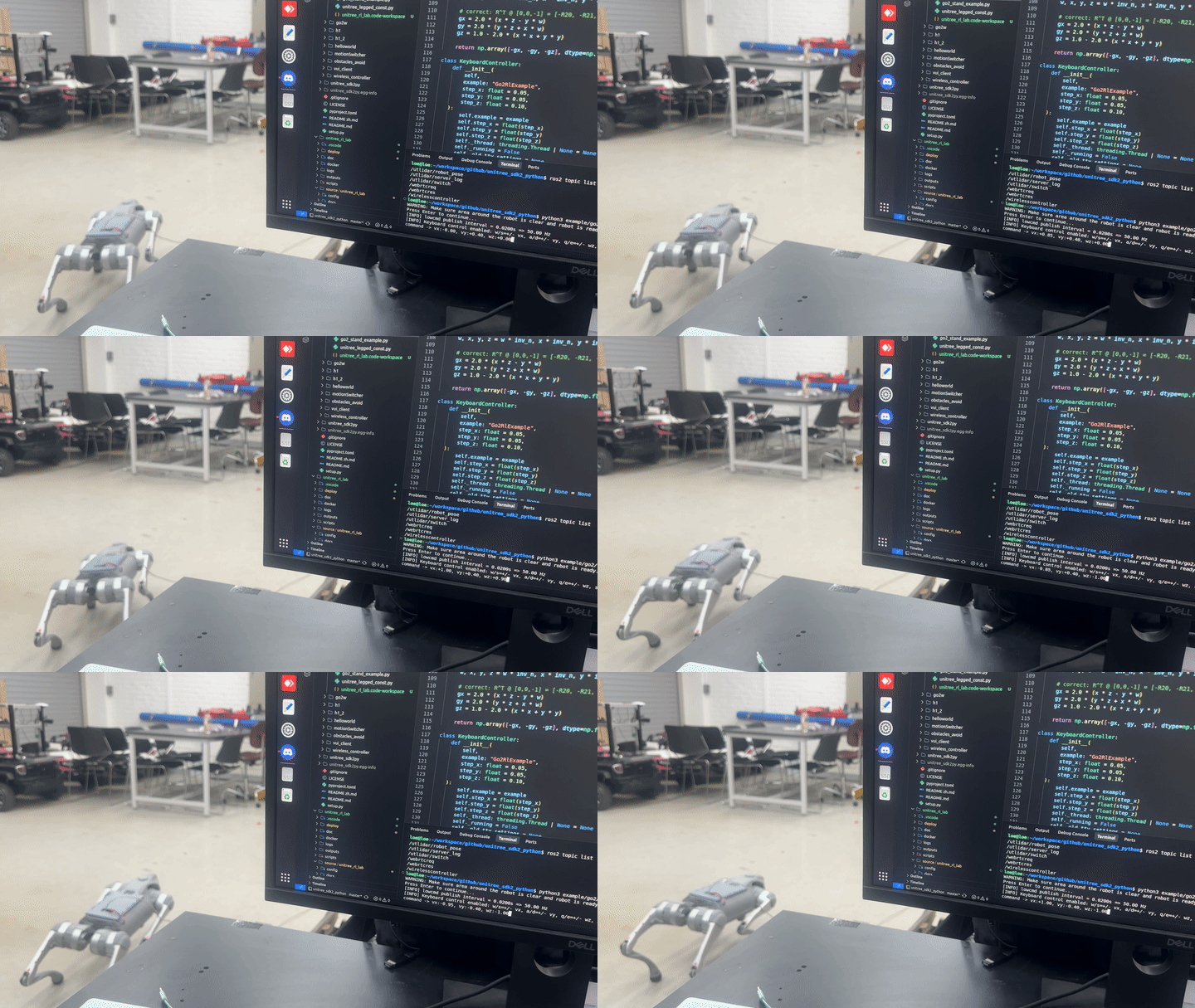](/assets/img/posts/unitree/sim2real/unitree-go2-part-1-sim2real-first-challenge/321cbb7d-7937-80c7-bb29-c37f639f4d00.gif){.popup .img-link .shimmer}
 {.popup .img-link .shimmer}
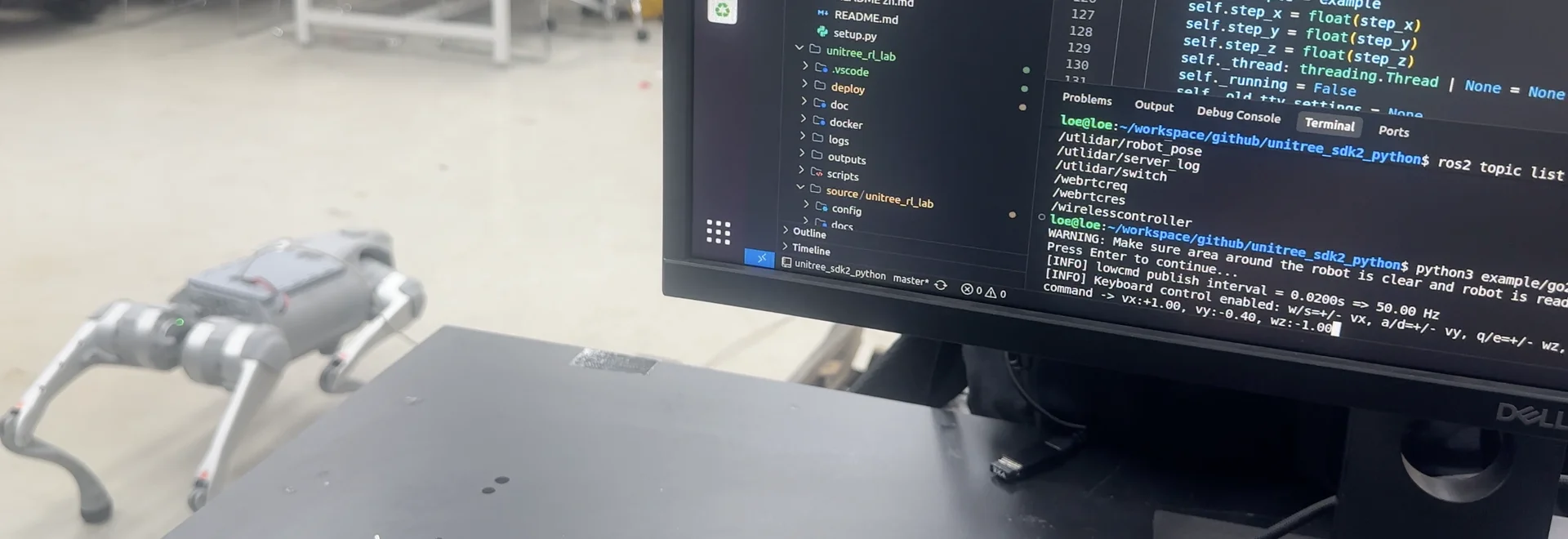
[1.0, 0.4, -1.0] 같은 command를 주었는데도 Go2는 발을 떼지 못했습니다. command 방향에 따라 base를 기울이기는 했지만, 실제 보행으로 이어지지는 않았습니다.
이 시점에서 예상한 원인은 아래와 같았습니다.
- deploy에서 구성한 observation이 training 때의 observation과 다를 수 있습니다.
- IMU 정보를 읽는 과정에서 좌표계가 어긋났을 수 있습니다.
feet_air_time,feet_slide처럼 발을 떼는 동작과 관련된 reward weight가 적절하지 않을 수 있습니다.
첫 시도는 실패였지만, 문제를 좁히기 위한 기준은 생겼습니다. 다음 단계에서는 reward 설정과 sim-to-sim 검증을 중심으로 원인을 확인합니다.